


Robotic surgery achieved 95-98% accuracy in 2026, setting a new benchmark for surgical precision. Advanced systems like the da Vinci 5 utilize tremor filtration, 3D HD visualization, and wristed instruments to enhance surgical accuracy. At Midlands Clinic, the 2023 merger with CNOS, P.C. connects Siouxland patients to this cutting-edge medical technology, ensuring access to the most precise surgical options available.
The integration of AI-powered systems further refines each movement, making today’s robotic surgeries more reliable than ever. These innovations translate to fewer complications, reduced blood loss, and faster recovery times for patients across the region. Midlands Clinic Dakota Dunes South Dakota continues to lead in adopting these advancements.
- 95-98% accuracy rate for AI-powered robotic systems in 2026 (PMC.ncbi.nlm.nih.gov/articles/PMC12181090/)
- 40% fewer surgical errors and 40% precision improvement over traditional methods (media.market.us/robotic-surgery-statistics/; pmc.ncbi.nlm.nih.gov/articles/PMC10076398/)
- da Vinci 5 provides 50x human hand precision with wristed instruments (facebook.com/mymichhealth, 2026)
How Does Robotic Surgery Achieve 95-98% Accuracy in Siouxland?
95-98% Accuracy Rate: AI-Powered Systems in 2026
The 95-98% accuracy rate reported in 2026 for AI-powered robotic surgical systems represents a quantum leap in patient safety (PMC). For context on how surgical robots evolved to this point, see surgical robot evolution and 2026 advancements.
This level of precision means that critical structures are identified and avoided with near-perfect consistency, drastically reducing the risk of inadvertent injury. For Siouxland patients, this translates to more successful outcomes and fewer postoperative complications.
- 95-98% overall accuracy in complex surgical tasks, as measured by AI-assisted robotic systems in 2026 studies (PMC)
- 40% precision improvement over traditional laparoscopic techniques, allowing for finer instrument control (media.market.us/robotic-surgery-statistics/)
- 0.48 ± 0.44 mm bone entry accuracy in orthopedic procedures, protecting surrounding nerves and tissues (nature.com/articles/s41598-020-64462-x)
- 0.3% anastomotic leak rate in colorectal surgeries compared to 2.1% with human surgeons, indicating superior suturing consistency (robocloud-dashboard.vercel.app/surgical-robotics-2026)
- 50x human hand precision with wristed instruments, enabling micro-movements impossible for surgeons (facebook.com/mymichhealth, 2026)
Precision Metrics Comparison: 40% Improvement, 0.48 mm Bone Entry, and 0.3% Leak Rate
Quantitative comparisons highlight the tangible benefits of robotic assistance over conventional surgery. These metrics align with broader future medicine innovations for 2026 that are reshaping healthcare. The table below summarizes key precision metrics from 2026 research.
| Precision Metric | Robotic Surgery (2026) | Traditional Surgery | Source |
|---|---|---|---|
| Overall Accuracy | 95-98% | Not specified | PMC |
| Precision Improvement | 40% better than laparoscopy | Baseline | media.market.us |
| Error Reduction | 40% fewer errors | Baseline error rate | pmc.ncbi.nlm.nih.gov/articles/PMC10076398/ |
| Bone Entry Accuracy | 0.48 ± 0.44 mm | Not applicable | nature.com |
| Anastomotic Leak Rate | 0.3% | 2.1% | robocloud-dashboard |
The 0.3% leak rate versus 2.1% in human-performed colorectal surgeries directly correlates with fewer postoperative infections, shorter hospital stays, and lower readmission rates. Similarly, sub-millimeter bone entry accuracy in orthopedic procedures minimizes damage to surrounding tissues, leading to faster rehabilitation. These improvements underscore why robotic adoption is accelerating across Siouxland and position Midlands Clinic to deliver these benefits locally.
Key Technologies Enabling Surgical Precision
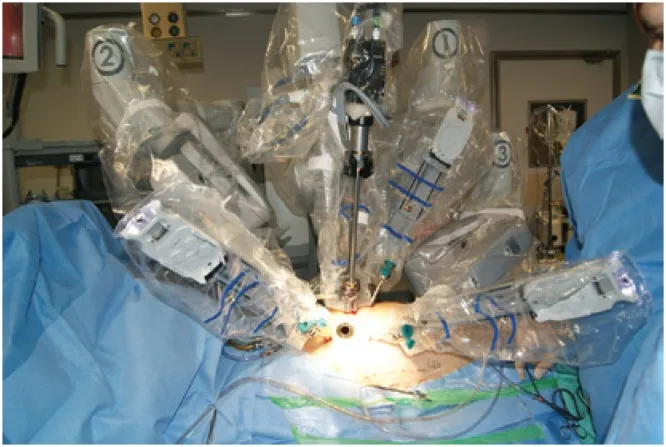
Tremor Filtration and 3D HD Visualization: Eliminating Human Limitations
Tremor filtration technology uses sensors to detect the surgeon’s hand movements on the console and software to filter out natural shakiness, resulting in smooth, controlled motions. 3D HD visualization provides a magnified, high-definition stereoscopic view of the surgical field, enhancing depth perception and detail recognition. The da Vinci 5 system combines both, allowing surgeons to operate with enhanced clarity while the robot compensates for any hand tremor.
Through its CNOS partnership, Midlands Clinic delivers these medical technology innovations at Midlands Clinic to Siouxland patients, ensuring that local surgeries benefit from the same precision tools used in leading academic centers. This synergy between human expertise and machine accuracy defines modern robotic surgery.
Wristed Instruments: 50x Human Hand Precision with da Vinci 5
Human hands provide three degrees of freedom at the wrist, limiting maneuverability in tight surgical spaces. The da Vinci 5‘s wristed instruments offer seven degrees of freedom, enabling 50x greater precision than the human hand (facebook.com/mymichhealth, 2026). This enhanced range of motion allows surgeons to perform complex tasks—such as suturing delicate vessels or navigating around critical structures—with unprecedented accuracy.
The instruments translate the surgeon’s hand motions into micro-movements with a scaling factor of 1:5 or greater, meaning a 1-centimeter hand movement becomes a 2-millimeter instrument tip movement. Combined with tremor filtration, this scaling yields the claimed precision advantage. In urological procedures, this allows for nerve-sparing techniques that preserve function; in gynecologic surgery, it enables precise dissection around the uterus and bladder.
Studies show that such precision reduces intraoperative blood loss by up to 30% and shortens hospital stays by an average of 1.5 days compared to open surgery. This technology exemplifies how digital tools improving healthcare delivery are setting new standards for surgical care across Siouxland.
Siouxland Robotic Surgery Adoption: Midlands Clinic’s Regional Advantage
UI Health Care Benchmark: 10,000+ da Vinci Procedures and Annual Expansion
University of Iowa Health Care‘s robotic surgery program serves as a regional benchmark, having completed over 10,000 da Vinci procedures as of 2026 (uihc.org). Their recent addition of three new robotic-assisted surgical systems will enable 1,000 more surgeries annually, demonstrating the growing demand and capacity for robotic interventions in Iowa.
This growth reflects how AI transforming patient care is becoming standard in leading institutions. UI Health Care’s experience provides a proven model for safety and efficacy that informs adoption across the Siouxland region.
- 10,000+ da Vinci procedures performed, establishing a robust track record in robotic surgery outcomes (uihc.org/news/robotic-surgery-program-hits-10000th-procedure-milestone)
- Three new robotic systems installed, expanding capacity to perform an additional 1,000 surgeries per year (uihc.org/news/ui-health-care-adds-three-new-robotic-assisted-surgical-systems)
- Multi-specialty application across urology, gynecology, and general surgery, offering comprehensive care pathways (uihc.org)
Local Siouxland Leaders: Sioux Center Health and Orange City’s da Vinci 5 Systems
Siouxland healthcare facilities are rapidly adopting robotic surgery, with Sioux Center Health becoming the first in its county to install a robotic arm (youtube.com Digital Exclusive). Orange City Area Health has also implemented the da Vinci 5 system for urology, gynecology, and general surgery, signaling broad regional acceptance of this technology.
This adoption mirrors global medical trends in Siouxland that emphasize technological advancement in rural healthcare. These early adopters validate the demand for precision surgery outside metropolitan areas.
- Sioux Center Health: First hospital in the county to offer robotic surgery, expanding access for rural patients (youtube.com)
- Orange City Area Health: Utilizes da Vinci 5 for multiple specialties, including urology and gynecologic procedures, improving local outcomes (Orange City Area Health)
- Regional momentum: These installations demonstrate that 2026 robotic technology is no longer limited to urban centers but is becoming standard across Siouxland (Local health reports)
Midlands Clinic’s CNOS Partnership: Delivering 2026 Precision to Siouxland Patients
Midlands Clinic‘s January 2023 merger with CNOS, P.C. creates a direct pathway for Siouxland patients to access state-of-the-art robotic surgery. The CNOS Sioux Point Clinic, led by experts like Dr. James Hegvik and supported by Midlands Clinic’s own Dr.
Keith Vollstedt, operates advanced robotic systems that achieve the 95-98% accuracy rates highlighted earlier. With over 30 years of experience serving Siouxland, Midlands Clinic acts as a local gateway, coordinating consultations and ensuring that residents benefit from the latest precision advancements without traveling far from home. This partnership exemplifies how regional collaboration can bring 2026 medical technology to smaller communities.
Through this alliance, Midlands Clinic stays at the forefront of healthcare technology trends 2026, ensuring patients receive the most advanced care. Personalized treatment plans incorporate robotic options for procedures such as prostatectomy, hysterectomy, and bariatric surgery, leading to less pain, fewer complications, and quicker returns to daily life.
Perhaps the most striking precision metric is the 0.3% leak rate in robotic colorectal surgery compared to 2.1% with traditional methods—a sevenfold reduction that directly impacts patient recovery. Siouxland residents considering surgery should schedule a consultation with Midlands Clinic to determine if robotic options suit their condition. Through its CNOS partnership, the clinic offers access to the same 2026 accuracy technologies that are setting new standards for safety and outcomes.
Taking this step could mean a faster, less complicated return to health. The combination of experienced surgeons and cutting-edge robotic systems ensures that patients receive care that is both precise and personalized.