


AI in diagnostic imaging represents a major leap in medical technology, with 2026 marking a turning point where artificial intelligence moves from experimental to essential in radiology departments nationwide. AI is enhancing diagnostic imaging accuracy and speed in 2026 by accelerating MRI scans up to 75%, boosting cancer detection by 17.6%, and enabling real-time brain MRI analysis with 97.5% accuracy.
These gains come from deep learning reconstruction algorithms that process images faster while reducing noise, and from AI’s ability to detect subtle patterns beyond human perception. The result is a transformative shift in radiology workflows, where AI handles repetitive tasks and flags urgent cases, allowing radiologists to focus on complex diagnoses and patient care.
- AI accelerates MRI scans by 50-75% using Deep Learning Reconstruction while maintaining or improving image quality.
- Cancer detection rates increase by 17.6% with AI assistance, with lung cancer accuracy reaching 98.7%.
- Real-world systems like University of Michigan’s brain MRI analyzer (97.5% accuracy) and Cleveland Clinic’s “second eyes” AI are already in use.
- 2026 trends include lower contrast agent doses, reduced motion artifacts, and AI quantification of Alzheimer’s disease progression.
- AI acts as a collaborative tool, handling repetitive tasks and triage, freeing radiologists for complex decisions.
How AI Is Enhancing Diagnostic Imaging Accuracy and Speed in 2026
AI’s integration into diagnostic imaging is no longer futuristic—it’s current reality, delivering measurable improvements in both speed and diagnostic confidence across MRI, CT, and X-ray modalities. The technology hinges on deep learning networks trained on millions of annotated images, enabling them to identify anomalies with consistent performance that rivals or exceeds experienced radiologists. According to recent data, AI radiograph interpretation achieves 92.4% accuracy compared to 91.3% for human readers alone, a seemingly small gap that translates into thousands of earlier cancer diagnoses annually.
More importantly, AI’s sensitivity and specificity for screening reach 95.33% and 92.01% respectively at the patient level, reducing both false negatives and unnecessary biopsies. These gains are not isolated; they reflect a systemic shift where AI handles volume and routine analysis, while human experts provide final interpretation and patient context.
The following table summarizes the most impactful AI-driven improvements in diagnostic imaging for 2026, based on the latest studies and industry reports:
| Imaging Modality | AI Improvement | Accuracy/Speed Metric | Source |
|---|---|---|---|
| MRI (general) | Scan time reduction | 50-75% faster | radiologyinfo.org (2025) |
| Cancer detection | Overall detection increase | 17.6% higher | articsledge.com (2026) |
| Lung cancer (CT) | Detection accuracy | 98.7% | ramsoft.com (2025) |
| Brain MRI | Diagnosis speed & accuracy | 97.5% accurate in seconds | michiganmedicine.org |
| Intracranial hemorrhage | Detection rate improvement | +12.2% | SERP AI Overview |
| Radiograph interpretation | AI vs human accuracy | 92.4% vs 91.3% | PAA meta-analysis |
These metrics illustrate a clear trend: AI is not just incremental improvement but a step-change in radiology performance. For patients, this means shorter scan times, less claustrophobia, lower radiation exposure, and faster diagnoses.
For healthcare systems like Midlands Clinic, which merged with CNOS in 2023, adopting such technology reinforces a commitment to modern, transparent care. The data also highlights a crucial nuance: AI’s greatest value lies in augmentation, not replacement, a point further explored in the sections below.
MRI Scan Acceleration: 50-75% Faster with Deep Learning Reconstruction
Deep Learning Reconstruction (DLR) represents the single biggest speed advancement in MRI technology for 2026. Traditional MRI requires acquiring extensive raw data to form an image, a process that can take 30-60 minutes. DLR algorithms, however, can reconstruct diagnostically quality images from significantly less raw data by intelligently filling in missing information.
According to radiologyinfo.org (Oct 24, 2025) and amnhealthcare.com (Feb 9, 2026), this technology reduces MRI scan times by 50-75% while simultaneously improving image quality by reducing noise and artifacts. For patients, this means less time confined in the scanner, which is particularly beneficial for those with anxiety or claustrophobia. For clinics, it increases scanner throughput by up to three patients per day without compromising diagnostic value.
Philips and other major imaging vendors have integrated DLR into their 2026 MRI systems, often branding it as “AI-powered accelerated imaging.” The technology also addresses motion artifacts—a common cause of rescans—by using AI to correct for patient movement during acquisition. This not only improves the patient experience but also lowers operational costs associated with repeat exams.
The faster scans also enable lower doses of gadolinium contrast, a safety advantage for patients with renal impairment. As AI continues to refine reconstruction, we can expect even greater acceleration without sacrificing the fine detail needed for neurological or musculoskeletal diagnoses.
Cancer Detection Boost: 17.6% Higher Rates Across Modalities
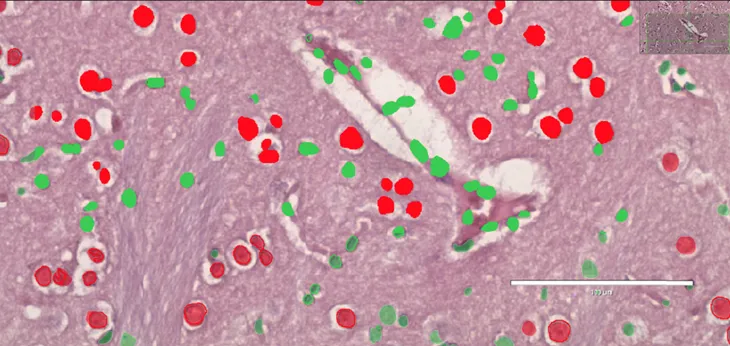
A March 6, 2026 study by articsledge.com provided compelling evidence that AI increases overall cancer detection rates by 17.6% across mammography, CT, and MRI. This improvement stems from AI’s ability to detect subtle lesions, microcalcifications, and tissue irregularities that may be overlooked by human eyes, especially in dense breast tissue or complex abdominal scans. The American Medical Association recognizes this as a significant advancement in early cancer diagnosis, as earlier-stage detection dramatically improves treatment outcomes and survival rates.
Beyond finding more cancers, AI also reduces false positives by better characterizing nodules and masses, distinguishing benign from malignant features with greater consistency. This means fewer unnecessary biopsies and less patient anxiety. For example, in lung cancer screening CT scans, AI can track nodule growth over time with volumetric precision, providing objective data for decision-making.
Hospitals implementing these tools report not only higher detection rates but also shorter report turnaround times, as AI can pre-populate measurements and highlight suspicious areas for radiologist review. The net effect is a more efficient, accurate, and patient-friendly screening process.
Lung Cancer Accuracy Reaches 98.7% with AI Algorithms
Lung cancer remains a leading cause of cancer death, but AI is tipping the scales toward earlier intervention. According to ramsoft.com (May 16, 2025), AI-assisted lung cancer detection now achieves 98.7% accuracy, a figure that surpasses many traditional diagnostic methods. This high accuracy is powered by deep learning models trained on hundreds of thousands of annotated CT scans, enabling them to identify tiny nodules and assess their malignancy risk with remarkable consistency.
The AI’s sensitivity reaches 95.33% and specificity 92.01% at the patient level, according to a recent PAA meta-analysis, meaning it catches almost all true cancers while keeping false alarms low. For radiologists, this translates into a powerful second opinion that flags potential issues they might have missed, especially in busy practices or during overnight reads. AI also automates the tedious task of measuring nodule size and tracking changes over time, providing precise, reproducible data for monitoring therapy response.
This automation reduces radiologist burnout and allows them to spend more time on complex case discussions and patient communication. With such high accuracy, AI is becoming an indispensable tool in lung cancer screening programs nationwide.
Brain MRI Diagnosis in Seconds: University of Michigan’s 97.5% Accurate System
Time is brain when diagnosing strokes, tumors, or hemorrhages, and the University of Michigan has developed an AI system that delivers diagnoses in seconds with 97.5% accuracy, as reported by michiganmedicine.org based on a 2024 study still highly relevant in 2026. This system analyzes brain MRI scans almost instantaneously, detecting critical conditions like acute ischemic stroke, intracranial hemorrhage, and mass effect. The speed is revolutionary: where a radiologist might take 20-30 minutes to thoroughly review a complex scan, the AI provides a preliminary assessment in under 10 seconds, prioritizing urgent cases for immediate attention.
The AI was trained on thousands of annotated scans from diverse patient populations, giving it robust pattern recognition across a wide range of abnormalities. In clinical deployment, it acts as a “first reader,” automatically triaging studies to the top of the radiologist’s worklist when a potential emergency is detected. This dramatically reduces turnaround time from hours to minutes, which is crucial for stroke patients where every minute of delay results in lost brain function.
The system also serves as an educational tool, highlighting regions of interest for radiology trainees. Its high accuracy rate means radiologists can trust its alerts, using it as a safety net rather than a replacement for their expertise.
Intracranial Hemorrhage Detection Improved by 12.2%
Detecting brain bleeds quickly is life-saving, and AI has made a measurable impact in this area. SERP AI Overview data shows intracranial hemorrhage detection rates improved by 12.2% with AI assistance, a significant gain in emergency settings where every second counts. AI algorithms analyze non-contrast CT scans—the standard initial test for suspected stroke—within seconds, highlighting areas of hyperdensity indicative of bleeding.
This improvement is especially valuable during off-hours or when radiologists are covering multiple facilities, as the AI provides an always-available safety check. Cleveland Clinic’s implementation, mentioned in beaconjournal.com (February 2026), uses AI as “second eyes” to double-check radiologist readings, catching subtle bleeds that might be missed in a fatigued or rushed review. The system integrates directly into PACS (Picture Archiving and Communication System), displaying AI findings alongside the images for easy verification.
This seamless workflow integration is key to adoption—radiologists don’t have to learn a new interface but can accept or reject AI suggestions with a single click. The result is fewer missed diagnoses and faster treatment initiation for hemorrhagic stroke patients.
Cleveland Clinic’s AI “Second Eyes” Enhance Radiologist Performance
Cleveland Clinic’s approach exemplifies the collaborative model that defines AI in diagnostic imaging for 2026. As reported by beaconjournal.com in February 2026, the institution uses AI as a “second pair of eyes” for every radiograph and CT scan, providing a consistent, unbiased review that complements human expertise. Radiologists there report that the AI catches subtle fractures, early-stage tumors, and incidental findings they might have overlooked, particularly during high-volume periods or overnight shifts.
The AI system is designed to augment, not replace, radiologists. It flags potential abnormalities and suggests measurements, but the final interpretation and report remain firmly in the clinician’s hands. This collaborative dynamic has improved overall diagnostic accuracy and reduced turnaround times without displacing staff.
In fact, radiologists at Cleveland Clinic note that the AI reduces cognitive load by handling routine measurements and comparisons, allowing them to focus on complex differential diagnoses and patient-centered communication. The system’s integration with PACS ensures that AI assistance appears within the familiar reading environment, minimizing disruption and maximizing adoption.
2026 Trends: Safer Low-Dose Scans and Alzheimer’s Disease Quantification
Looking ahead to 2026, two major trends are reshaping diagnostic imaging: safer low-dose contrast scans and AI-driven quantification of neurodegenerative diseases. First, AI enables lower doses of gadolinium contrast in MRI, reducing the risk of nephrogenic systemic fibrosis in patients with kidney issues.
By reconstructing high-quality images from lower-dose data, AI maintains diagnostic confidence while enhancing patient safety. This trend aligns with the broader medical technology focus on minimizing iatrogenic harm.
Second, AI is being trained to quantify brain atrophy associated with Alzheimer’s disease, providing objective, reproducible measurements for early diagnosis and treatment monitoring. These algorithms can segment hippocampal volume and compare it to normative databases, giving neurologists precise data to track disease progression. Industry leaders like Philips are investing heavily in these applications, recognizing the growing need for tools that support the aging population.
Additionally, AI continues to reduce motion artifacts, meaning fewer repeat scans, lower costs, and a better patient experience. These 2026-specific advancements demonstrate that AI’s value extends beyond speed and accuracy to encompass safety, personalization, and proactive health management.
Human-AI Collaboration: Radiologists Focus on Complex Cases
The prevailing model in 2026 is collaboration, not replacement. AI handles repetitive tasks like measuring lesions, comparing current scans to prior studies, and triaging urgent cases, freeing radiologists to concentrate on complex diagnoses, patient consultations, and multidisciplinary teamwork. A recent American Medical Association report emphasizes that AI augments radiologists, reducing burnout by eliminating tedious work and allowing them to practice at the top of their license.
While public discourse sometimes fears job displacement, the data shows AI creates a more efficient and satisfying work environment. Radiologists who embrace AI tools become “super-radiologists,” achieving higher accuracy and productivity.
They spend less time on quantitative tasks and more time on clinical reasoning and patient interaction—the aspects of medicine that require human judgment and empathy. This collaborative synergy is the true breakthrough: AI as a tireless assistant that elevates the entire radiology department’s performance, ultimately improving patient outcomes across the board.
For patients in Siouxland seeking these advanced diagnostic capabilities, Midlands Clinic Dakota Dunes offers integrated medical technology solutions that prioritize accuracy and speed. By combining decades of surgical, urology, and weight loss expertise with modern AI-assisted imaging, the clinic ensures transparent, dedicated care. To learn more about how these technologies are applied in a patient-centered setting, explore the clinic’s medical technology page.
The evolution of AI in diagnostic imaging also parallels advancements in surgical robotics, where similar principles of precision and collaboration are transforming operating rooms. Those interested in the broader technological shift can review the evolution of surgical robots to see how AI is reshaping interventions beyond the radiology suite.
Looking further ahead, the future of medicine points toward even deeper AI integration, from predictive diagnostics to personalized treatment plans. Understanding these key innovations helps patients and providers prepare for what’s next in healthcare.
Beyond imaging, digital tools are improving healthcare delivery across the continuum, from administrative efficiency to remote monitoring. The article on tech in medicine explores how these innovations work together to create a more connected, effective system.
For a wider perspective on how global medical trends are influencing local Siouxland healthcare, consider the implications of international advancements on regional practice patterns.
Finally, staying informed about overall healthcare technology trends in 2026 provides context for the rapid changes occurring in specialties like radiology, ensuring patients and providers can navigate the evolving landscape with confidence.
The most surprising insight from 2026 data is that AI’s biggest impact may not be in replacing radiologists but in making them more accurate and less burned out. The collaborative model turns AI into a force multiplier for human expertise. To experience these AI-enhanced diagnostic capabilities firsthand, schedule a consultation at Midlands Clinic Dakota Dunes, where advanced imaging technology meets expert, transparent care.